The Moon Is Always Doing Something. Now There Is a Device for Noticing.
A circular screen, an ESP32, and a German maker's own photograph of the moon as the texture map. The choice most builders would skip is the one that gives the object its weight.
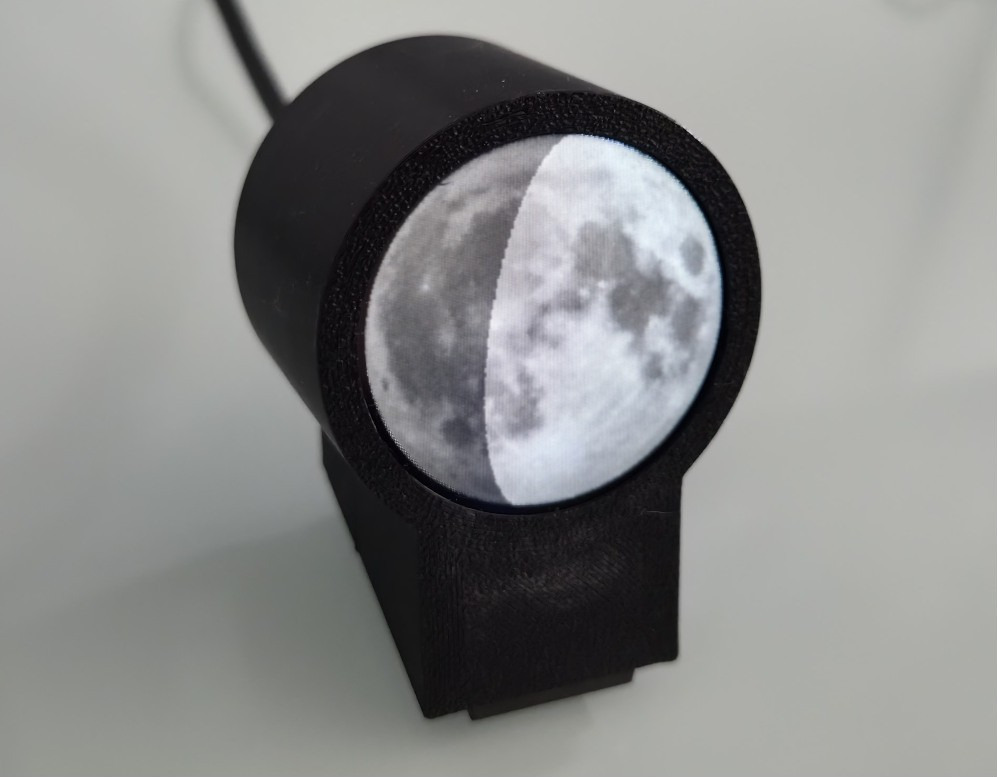
Karsten Mueller, a German maker, has built a small desk object that renders what the moon looks like at this exact moment from this exact location. The build is a circular display, an ESP32-S3, and a 3D printed case. Hackaday picked it up this week.
The interesting part is the software. It takes your local time, latitude, and longitude into account and produces an approximation of the moon as it would appear if you looked up from your specific window. Even when the moon is on the other side of the Earth. Even when it is barely visible in daylight. Even when there are clouds. The first build used a photograph of the moon that Karsten took himself; an option to pull NASA imagery exists as a fallback. The source is on GitHub. The original write-up is in German.
The choice to use his own photo first matters more than it might seem. NASA's moon imagery is technically perfect and emotionally generic. A photo a person took of the same moon you can see is a different category of object. It carries the fact that someone, somewhere, looked up. What if more of the small devices that live on our desks pointed at slow things we have stopped noticing, instead of fast things we cannot stop checking?