A Screen That Flashes Through Six Colors Before It Shows You Anything
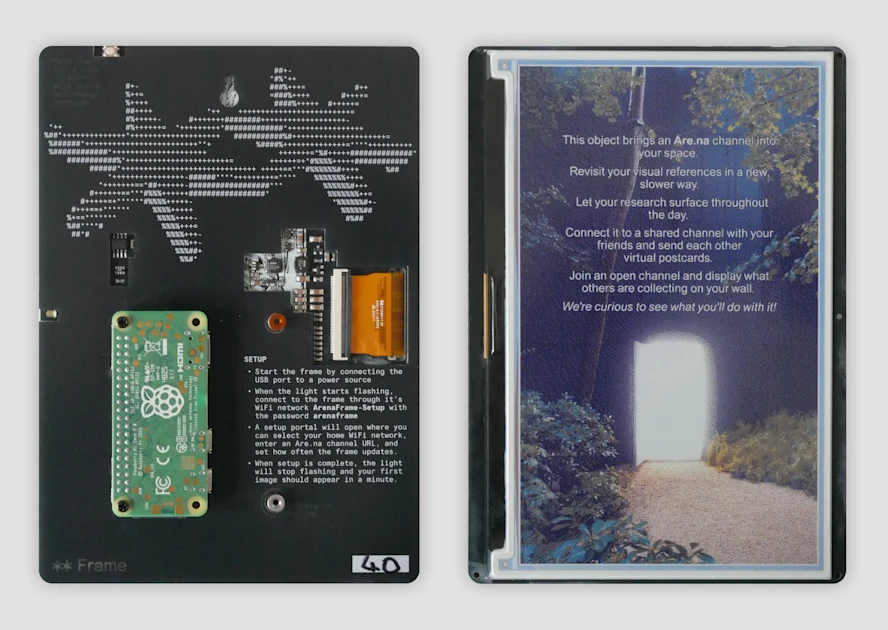
Six pigments, laid down one layer at a time, every time the picture changes. The delay is the part its designer wanted you to notice.
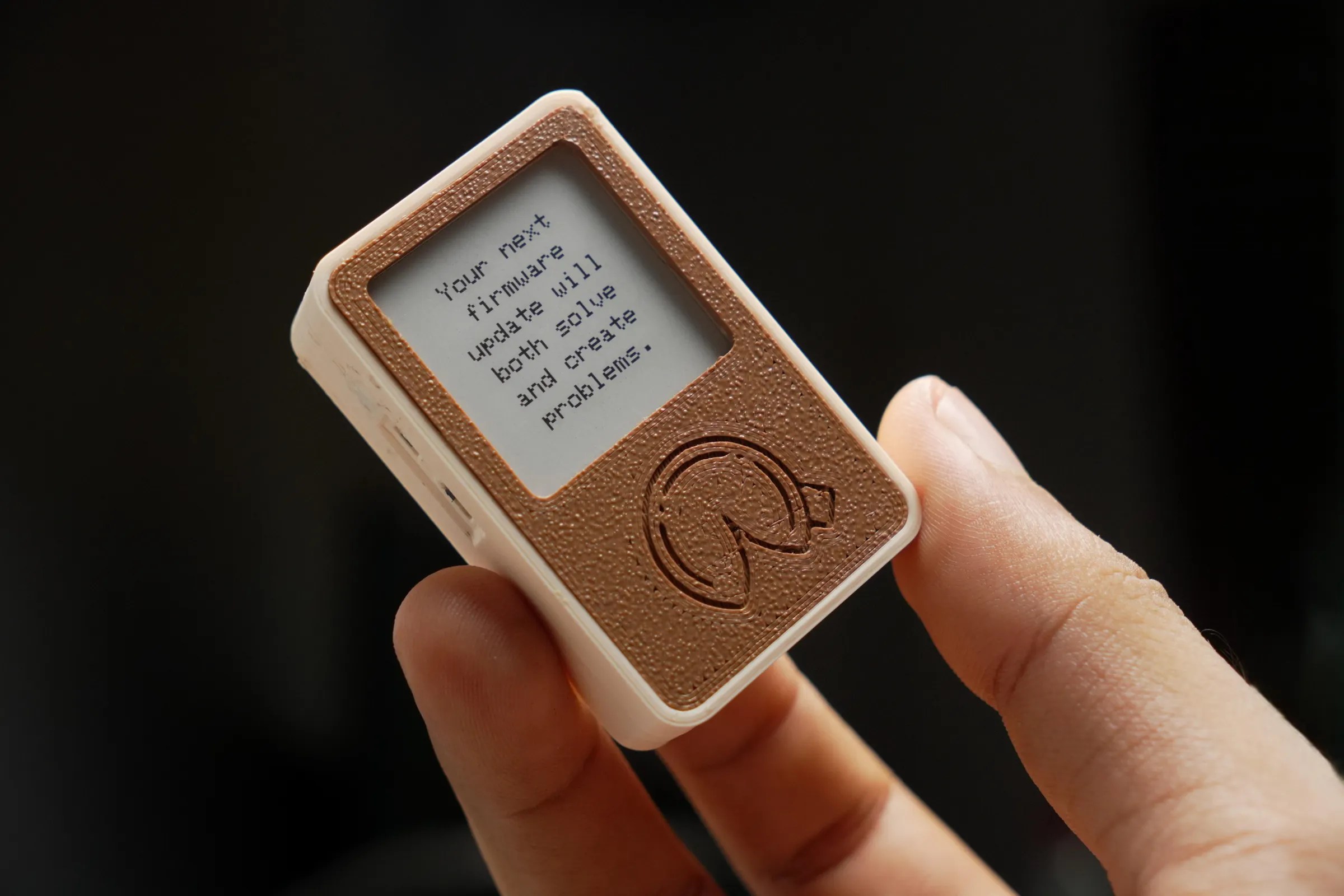
Three thousand answers, sealed on the board at build time, with no way to add a three-thousand-and-first. The ceiling is the design.
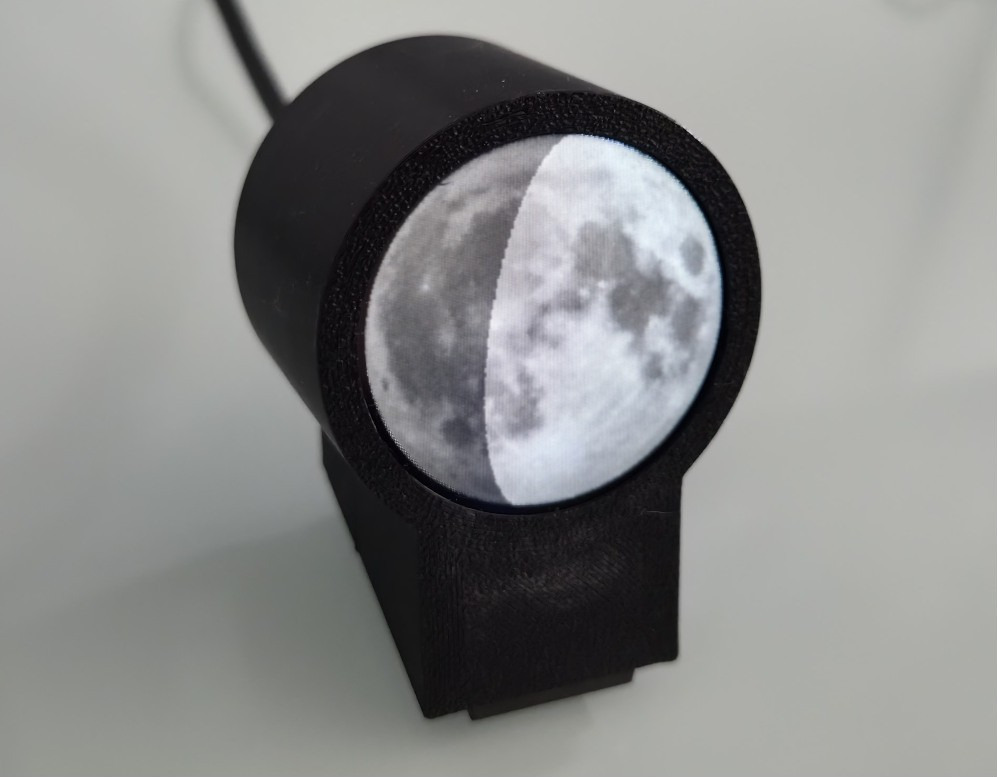
A circular screen, an ESP32, and a German maker's own photograph of the moon as the texture map. The choice most builders would skip is the one that gives the object its weight.
Two e-ink screens, a hinge, and six centuries of book design. Diptyx is an open-source reader that closes like a codex and needs no account, no cloud, no case.
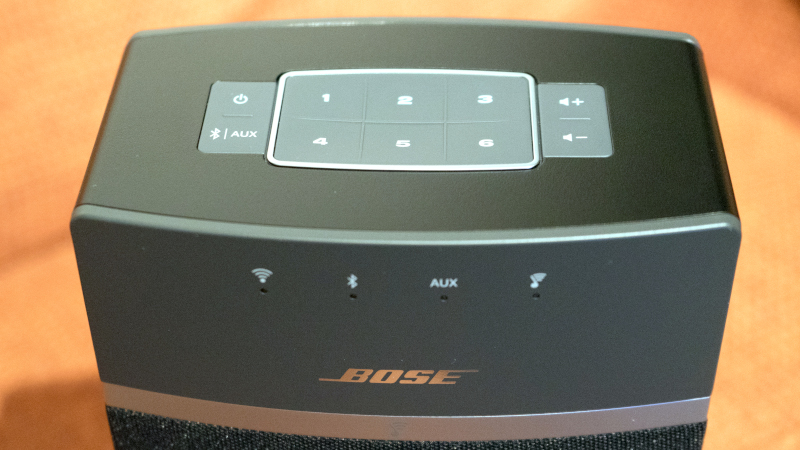
Bose killed the cloud. A $5 ESP32 stick called SixBack brings the preset buttons back by pretending to be the server. The speaker never knows the difference.
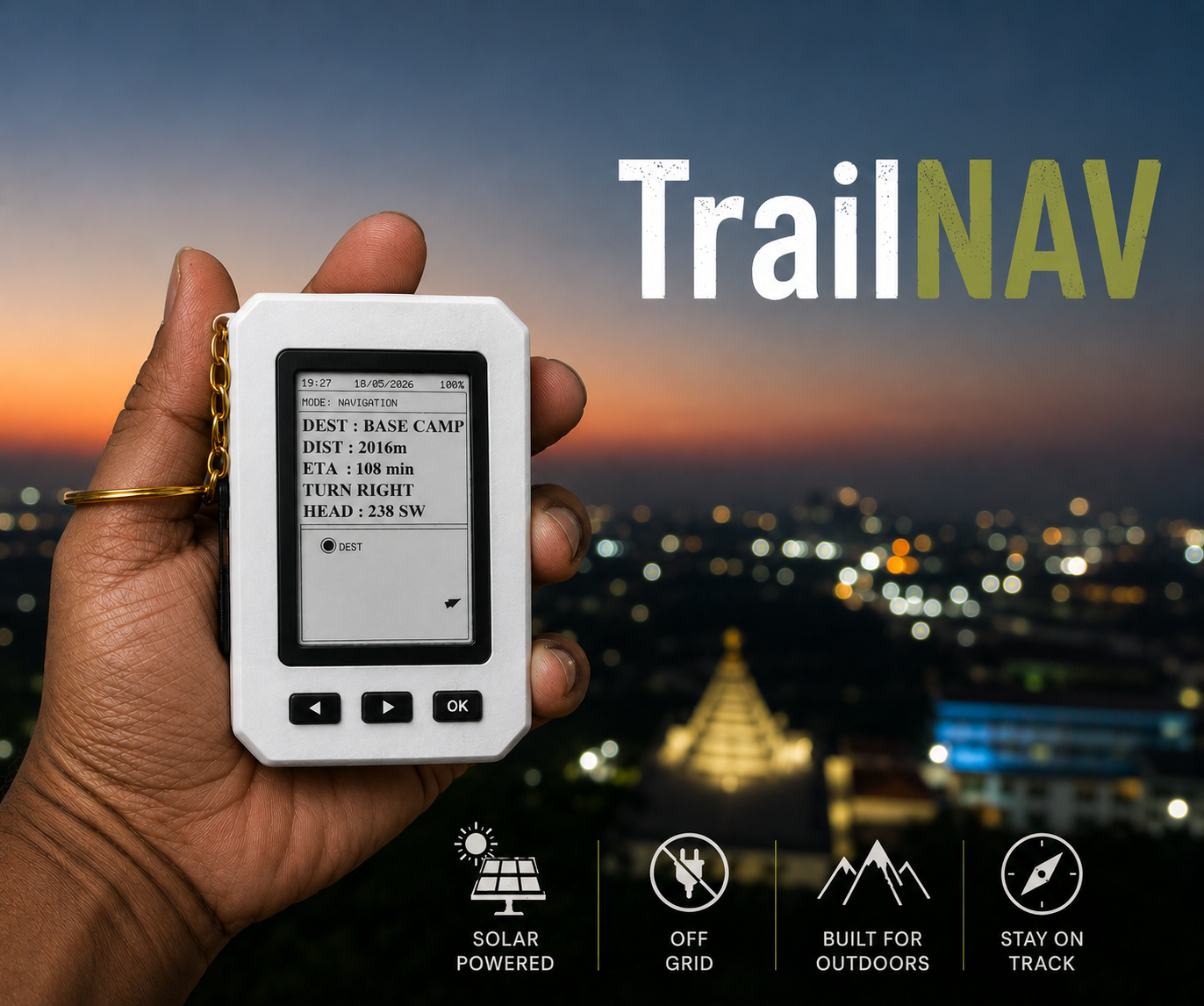
A solar-powered, e-ink GPS compass that does exactly one thing: points you home. No app, no cell signal, no charger. Built with a XIAO ESP32-C6 and published as open hardware.
A developer put an entire fake Bose cloud on a $5 ESP32 stick. Your SoundTouch speaker can't tell the difference.
A solar-powered e-ink navigator built on an ESP32. It points you home and runs for days. No signal, no charger, no map app.
Two e-ink screens, a hinge, and zero cloud dependencies. Diptyx built an open-source reader shaped like the thing it replaced.
A Raspberry Pi inside, a lab voltmeter outside, and a single needle that swings to tell you the hour. The cost of one needle is patience. Maybe that is the feature.
A $15 ESP32 dev board, a cheap yellow display, and a piece of code where every fish has its own personality. The result lives on your desk and lets you tap to feed it.
A maker has shipped a PCB die that tracks streaks, develops moods, and quietly nudges future results to amplify your luck or your suffering. Each one has its own personality.