
Raspberry Pi Put Cardboard in the Official Build Guide
The first construction step is cardboard. The most important decision, according to the company that sells the chip, is which box you put it in.
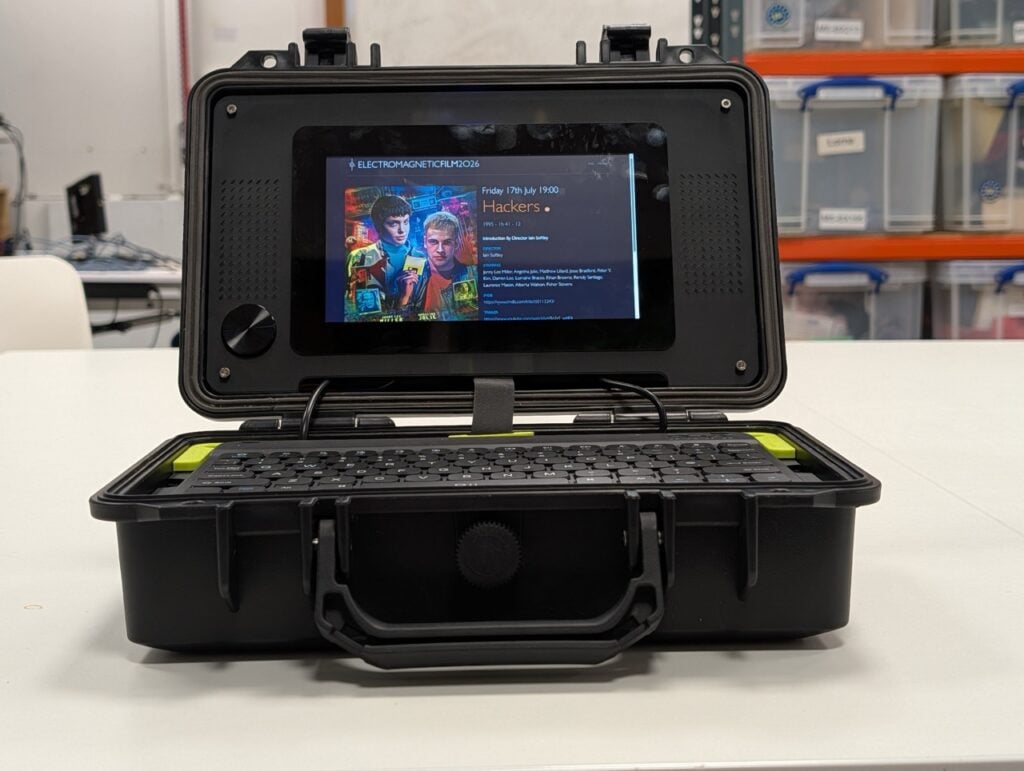
Raspberry Pi published its first official cyberdeck tutorial on August 24, written by Brian Corteil for the company’s Maker Monday series. A cyberdeck is a homemade portable computer, built to do something a laptop cannot, or built for the satisfaction of having built it. The guide runs magazine length and appears in issue 168 of Raspberry Pi Official Magazine, a cyberdeck special that is free to read online.
The reference build is a Raspberry Pi 5 with a 7-inch Touch Display 2, a Rii RK302 Bluetooth keyboard picked because it fits, and a Pimoroni Picade Max audio card that drives the speakers over one USB-C cable and leaves all 40 GPIO pins free. Power is a LiPo behind an inline fuse feeding a DC-to-DC converter at 5V and 5A, sized by arithmetic the guide shows in full: 25W for the Pi, 3W for the display at full brightness, so 28W minimum. The housing is an 11.5-inch waterproof hard case. Construction begins with cardboard-aided design, mocking the layout up in cardboard before anyone opens SOLIDWORKS. Speakers mount behind the front plate so no holes get drilled. The display ribbon is wrapped in cloth harness tape so it reads as part of the build.
The load-bearing line is “the case defines the cyberdeck.” The guide opens by admitting the company has not been able to get away from cyberdecks this year, which is an unusual thing for a manufacturer to put in writing. In the comments, someone asked why bother when a Pinebook Pro arrives assembled for $219. Someone else answered that it is like asking why anyone bakes bread. What does a chip company gain by telling you the most important decision is which box you like the look of?