Sugimoto Designed His Own Singapore Show as a Mandala, and Put 14 of His Fossils in It
The artist designed the gallery layout himself, as a circular mandala mirroring the Five Elements. Then he set 14 fossils from his personal collection inside it.
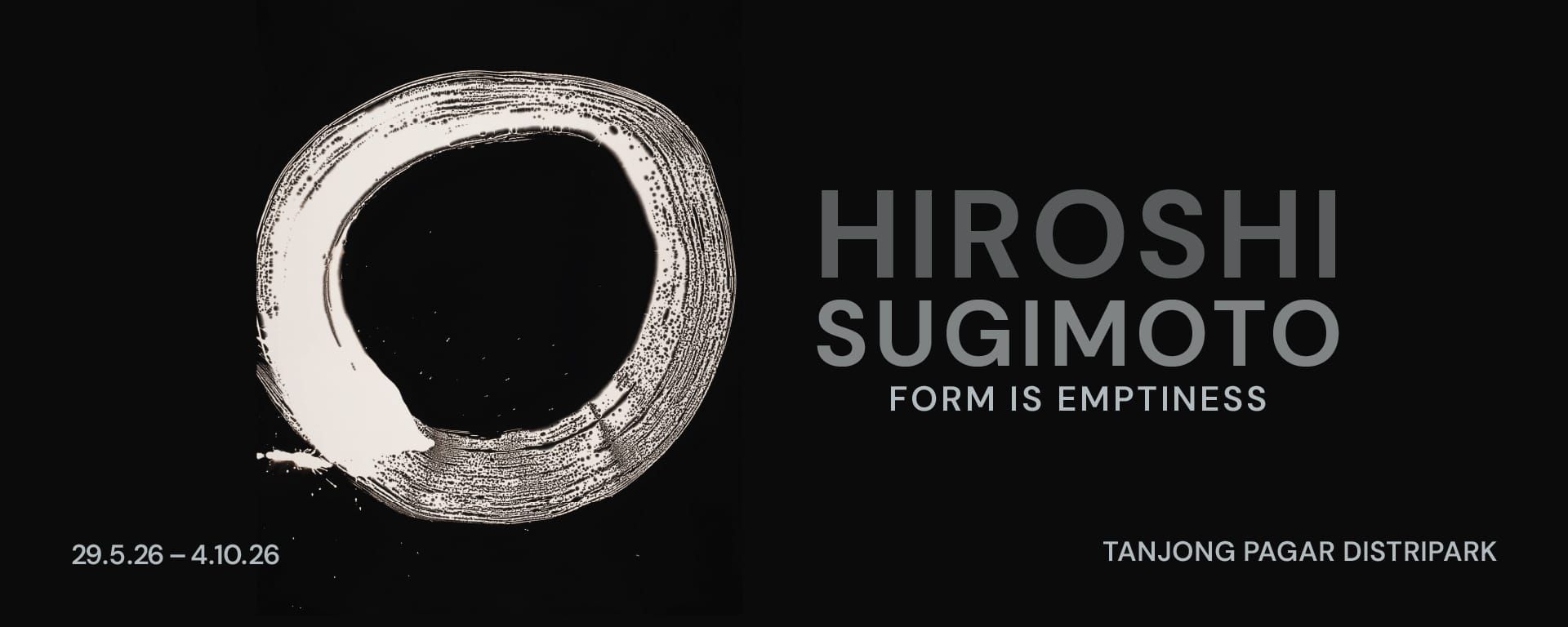
Hiroshi Sugimoto: Form Is Emptiness opens this Friday at the Singapore Art Museum, the artist's first major survey in Southeast Asia. The show collects 63 works across 11 series and sets them in conversation with 14 fossils from Sugimoto's personal collection. The title is a line from the Heart Sutra, a foundational Buddhist text.
The unusual move: Sugimoto designed the gallery layout himself, as a mandala, a circular geometric figure that in Buddhist symbolism represents the universe. Five interlinked sections trace the Buddhist Five Elements of Earth, Water, Fire, Wind, and Void, and the paths branch and loop instead of running in a single line, so the viewer chooses their own route. This is consistent with how Sugimoto has always worked, treating photography as a thinking practice that extends into architecture, garden design, calligraphy, and food. In 2008 he founded the New Material Research Laboratory, an architectural office that builds with traditional Japanese materials and techniques. In 2017 his Odawara Art Foundation opened Enoura Observatory, a land art complex between the Hakone foothills and Sagami Bay.
Sugimoto's long-exposure Seascapes compress hours of horizon into a single still frame. His Theatres series exposes a whole feature film onto one sheet of film, leaving the screen as pure white light. Both are arguments that an image can hold time the way a fossil does. What changes about the act of looking when the photograph and the fossil are hung in the same room?