
102 Designers, One Fake Flat, and a Rule: Every Object Must Come From a Limitation
Two London Design Festival shows, one from first-year students and one from working designers, land on the same rule: give people less and the objects come out sharper. A whole flat of evidence opens Saturday.
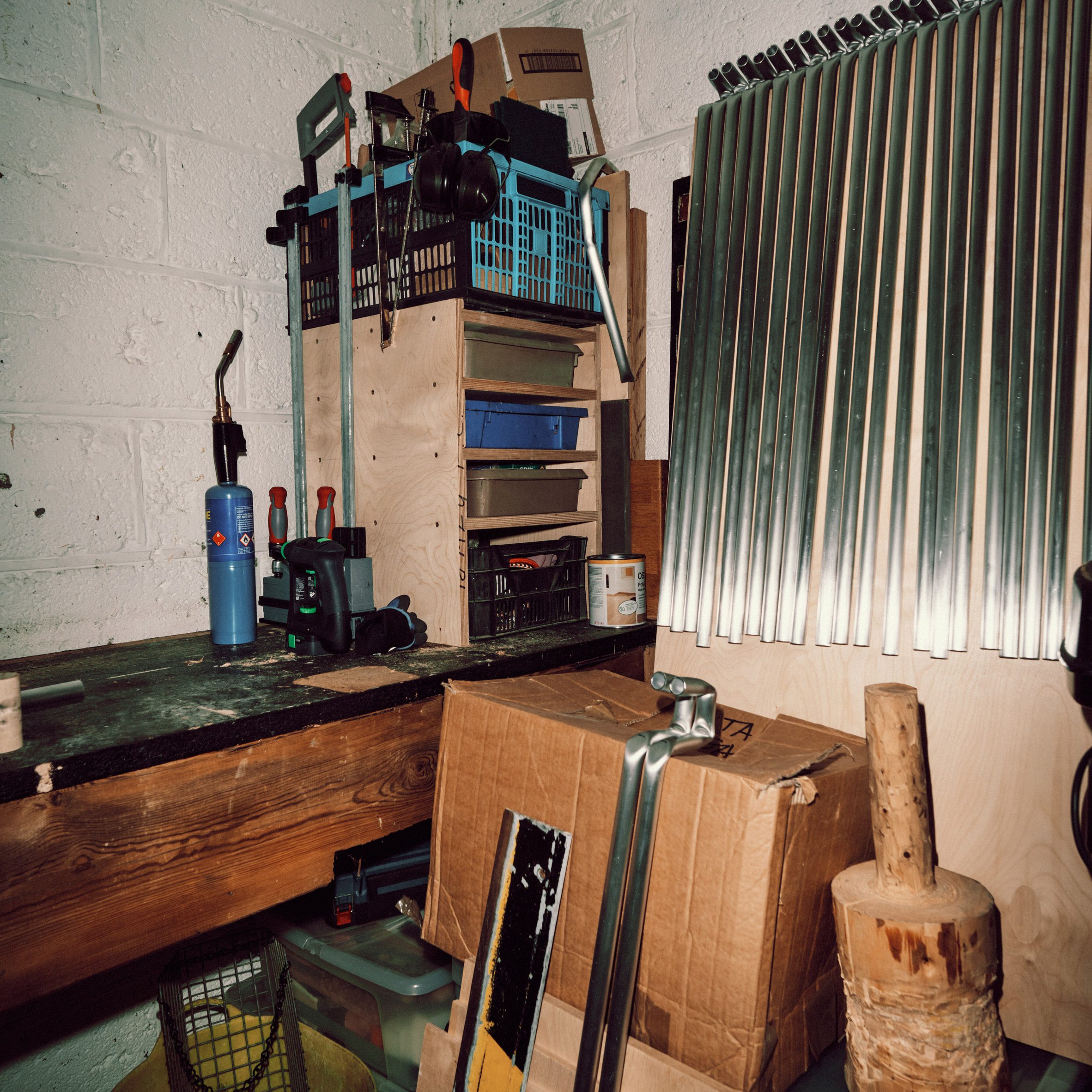
London Design Festival opens Saturday, and Dezeen's preview of fourteen must-see shows keeps returning to one theme: constraint. At Aram on Drury Lane, the non-profit collective Design Everything has turned the downstairs gallery into the flat of a typical young London designer and filled it exclusively with objects from 102 emerging practitioners, chosen from an open call that drew more than 500 responses. Every piece was made in response to a limitation: space, time, budget, or access. Down the road at Thurloe Place, the Royal College of Art's One Tool, One Stool shows what MA Design Products graduates made in their very first exercise as students. A stool, built using a single tool.
The two shows come at the same idea from opposite ends of a career. The RCA brief is pedagogy. Strip the workshop to one rasp or one saw and the material has to do the arguing; every joint becomes a decision instead of a default. The Design Everything show is the same brief imposed by the city. Those 102 makers had no say in their limits. The shared bedroom is the studio, the budget is whatever survives rent, and the show is framed openly as a comment on the barriers facing independent creatives in London. It is free to exhibit in, and Aram is running a free coworking space upstairs for the duration.
What both rooms demonstrate is that objects made under a hard limit come out particular. When you cannot do everything, what you did becomes legible in the thing itself. You can see the one tool in the stool. You can see the rent in the lamp.
We keep saying the shift from maximum functionality to maximum well-being starts with subtraction, and here is a whole flat of evidence. Maybe this is what a design school is for: teaching the cut before teaching the tool. What if the household objects of the next decade are being shaped right now by what a designer could afford to make in a shared bedroom?